Synechron Technology Outlook 2026
AI
The last two years were about experiments. Organizations launched proofs of concept with generative AI, moved selected workloads to cloud and refreshed their internal narratives around “digital transformation.”
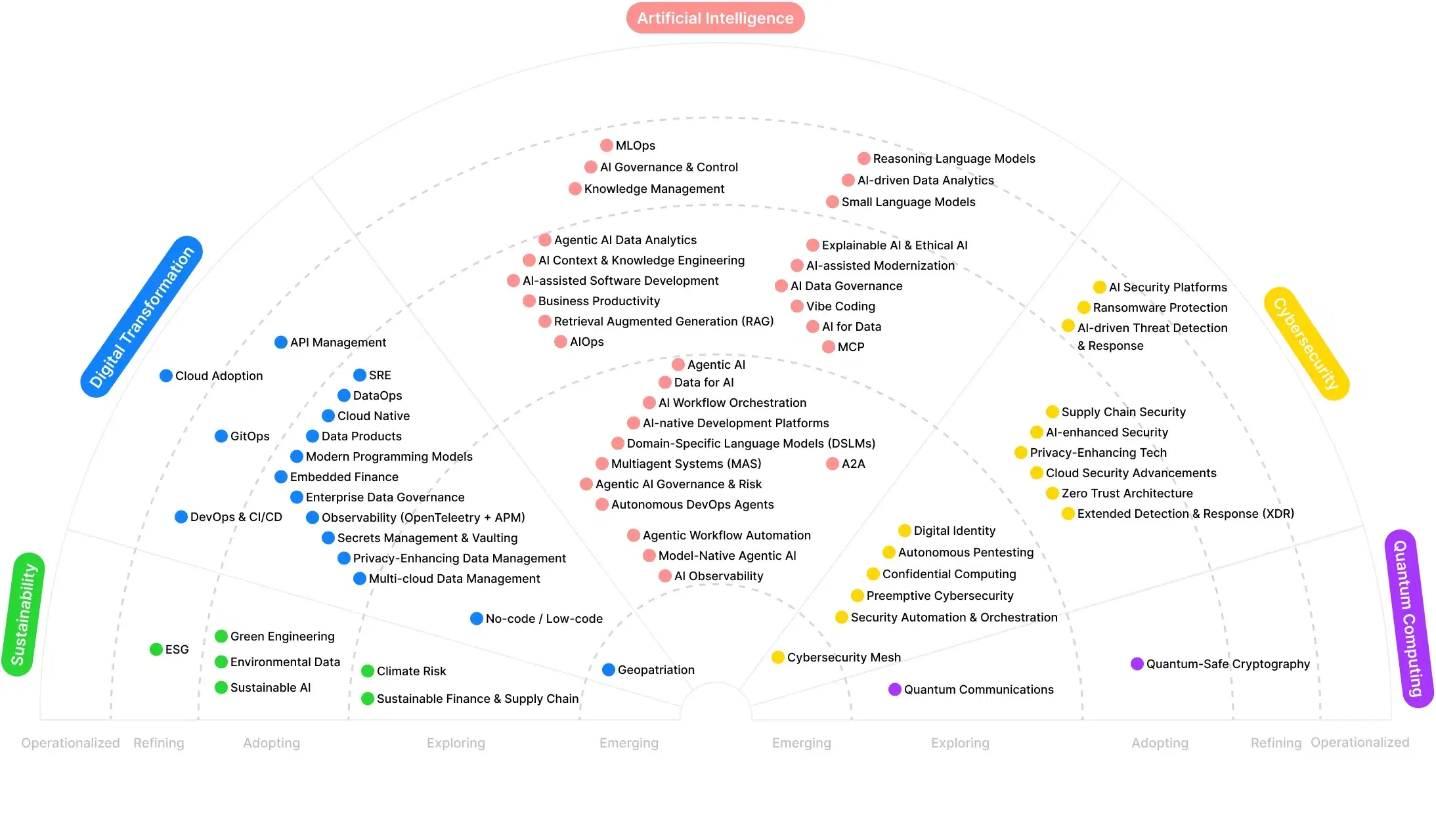
This outlook is not a catalog of technologies. It is a map of where we see investment, innovation and pressure converging in our global work with banks, insurers, asset and wealth managers, payments providers and supporting market infrastructures.
By 2026, the tone has changed. Boards and regulators are asking different questions:
- Where are the hard efficiency gains?
- How are we governing AI and data at scale?
- Can our architecture and people keep pace with the tools we are already piloting?
- Are we building for a world of energy, compute and regulatory constraints, or ignoring them?
Across our global financial services work, six themes repeatedly surfaced as decision points for CIOs, CTOs, CISOs and heads of business:
- Agentic AI moving from novelty to decision-making automation.
- Agentic workflow automation turning knowledge work into orchestrated action.
- AI-driven threat detection and response redefining security operations and AI governance.
- Cloud-native core systems as the operating standard for digital transformation, not just a deployment choice.
- Quantum-safe systems moving from specialist topic to regulatory expectation.
- Green engineering emerging the engineering response to an energy-hungry AI era.
These trends are not independent. Agentic AI presumes a certain level of cloud maturity. AI security is impossible without architectural visibility. Green engineering will increasingly shape what “good” looks like for AI workloads. Quantum-safe cryptography intersects directly with core modernization and long-lived financial instruments.
They also reflect several cross-cutting dynamics we observe across institutions. Clients are no longer satisfied with dashboards. They want systems that take bounded, auditable action on their behalf. Fragmented systems and legacy integration patterns continue to act as hidden constraints, limiting what can be automated or secured no matter how advanced the AI model.
Shadow AI, model sprawl and cloud instances left running after pilots show how governance is still catching up with early experimentation. Energy and efficiency, once peripheral considerations, are becoming strategic variables as AI workloads scale. And regional divergence creates global pressure for institutions operating across markets.
How We Built This Outlook (Methodology)
This outlook is grounded in:
Client demand signals The briefs we receive, RFP themes and projects delivered across global banking, capital markets and insurance.
Delivery and architecture patterns Where modernization work is actually being funded: what gets refactored, what gets containerized, what is wrapped vs rebuilt.
Synechron Labs accelerators and experiments More than 100 accelerators developed over eight to 10 years, used as a lens into emerging use cases that move from “demo” to “deployment.”
Interviews with our Experts In AI, cybersecurity, digital transformation and software engineering, covering both success stories and stalled initiatives.
We evaluate each trend across four dimensions:
- Business relevance for financial services
- Technical feasibility and architectural impact
- Regulatory and risk implications
- Talent and operating-model implications
We also distinguish between:
“AI for X” – using AI to augment an existing function (for example, security operations). “X for AI” – adapting that function so AI itself is governed, secured and sustainable (for example, security for AI models).
Trend 1 – Agentic AI
What It Is
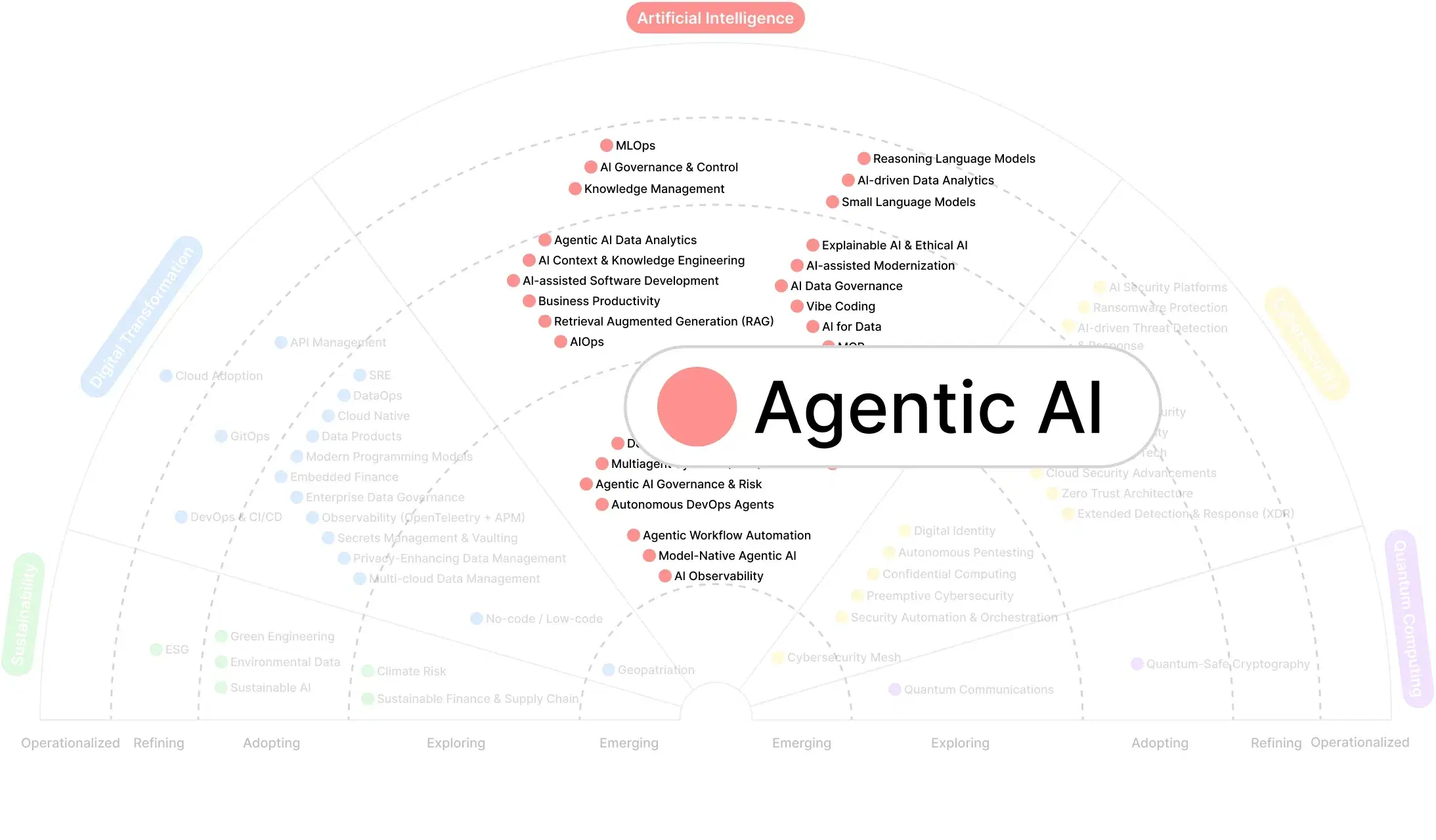
Agentic AI refers to systems that do more than answer questions or generate content. They can decide what to do next, orchestrate tools and data sources and execute multistep plans toward a goal within defined constraints.
Today, most so-called “agents” are still advanced copilots: they check facts, provide grounded responses and support humans in making decisions. By the end of 2026, we expect more systems that own parts of the decision loop in controlled environments.
Many institutions are beginning to build AI-native developer platforms that provide consistent environments for testing, integrating and governing agentic systems. These internal platforms bring together model hosting, routing, evaluation tooling, prompt libraries and secure connections into enterprise systems.
They provide a structured space where developers and architects can design, test and validate agent behavior with guardrails. They also reduce fragmentation by giving teams shared patterns for building and deploying agents, which shortens development cycles and creates more predictable operational outcomes.
Why It Matters in 2026
For financial institutions, the promise of agentic AI lies in:
- Handling complex, multi-step tasks where rules are partial and context is messy, for example, assembling a client briefing across systems, monitoring regulatory changes and updating internal policies, or orchestrating data collection for a KYC refresh.
- Reducing cognitive load for knowledge workers, not just generating draft content but steering interactions across multiple applications.
- Unlocking value from existing tooling, by coordinating APIs, search, analytics and workflow engines that already exist but are underutilized.
The risk: deploying agentic systems into brittle architectures or ambiguous ownership models, where it is unclear who is accountable when an autonomous step goes wrong.
Where Momentum Is Showing Up
- Agent protocols and tooling ecosystems (for example, multi-tool orchestration, agent-to-agent protocols) are maturing rapidly, but security capabilities around these protocols are still early. Enterprises will demand stronger guarantees before connecting agents to sensitive systems.
- Developer-first agents are arriving first: embedded into IDEs, CI/CD pipelines and testing workflows. They pave the way for more business-facing agents.
- Platform providers (OS, productivity suites, CRM, core banking vendors) are embedding agentic capabilities at the fabric level, reading emails, scheduling, triaging tasks, bringing “everyday agents” to millions of users without custom engineering.
Key Uncertainties
- Trust and control: How will institutions prove that agent decisions are bounded, auditable and explainable to regulators?
- Failure modes: What governance model applies when an agent takes a wrong action in a live system?
- Economics: Can agents deliver sufficient incremental value to justify their compute and integration costs, especially at enterprise scale?
Big Questions for Leaders
- Where in our organization do dynamic, multistep tasks consume disproportionate expert time and could be partially delegated to agents?
- What guardrails, approval flows and rollback mechanisms would we require before allowing agents to take any action in production?
- How will we measure value from agentic systems beyond simple productivity anecdotes?
Synechron Vantage Point
We see two realities simultaneously:
Most “agentic” deployments today are fact-checking copilots with human-in-the-loop approvals.
However, the next wave of client demand is clearly oriented toward systems that can own more of a workflow, from drafting a response to opening tickets, calling APIs and closing tasks.
Our own accelerators have moved from showcasing techniques (for example, retrieval-augmented generation in Amplify pitchbook generation) to designing business-relevant agent flows that sit on top of existing systems and are realistic about adoption and governance constraints.
Trend 2 – Agentic Workflow Automation
What It Is
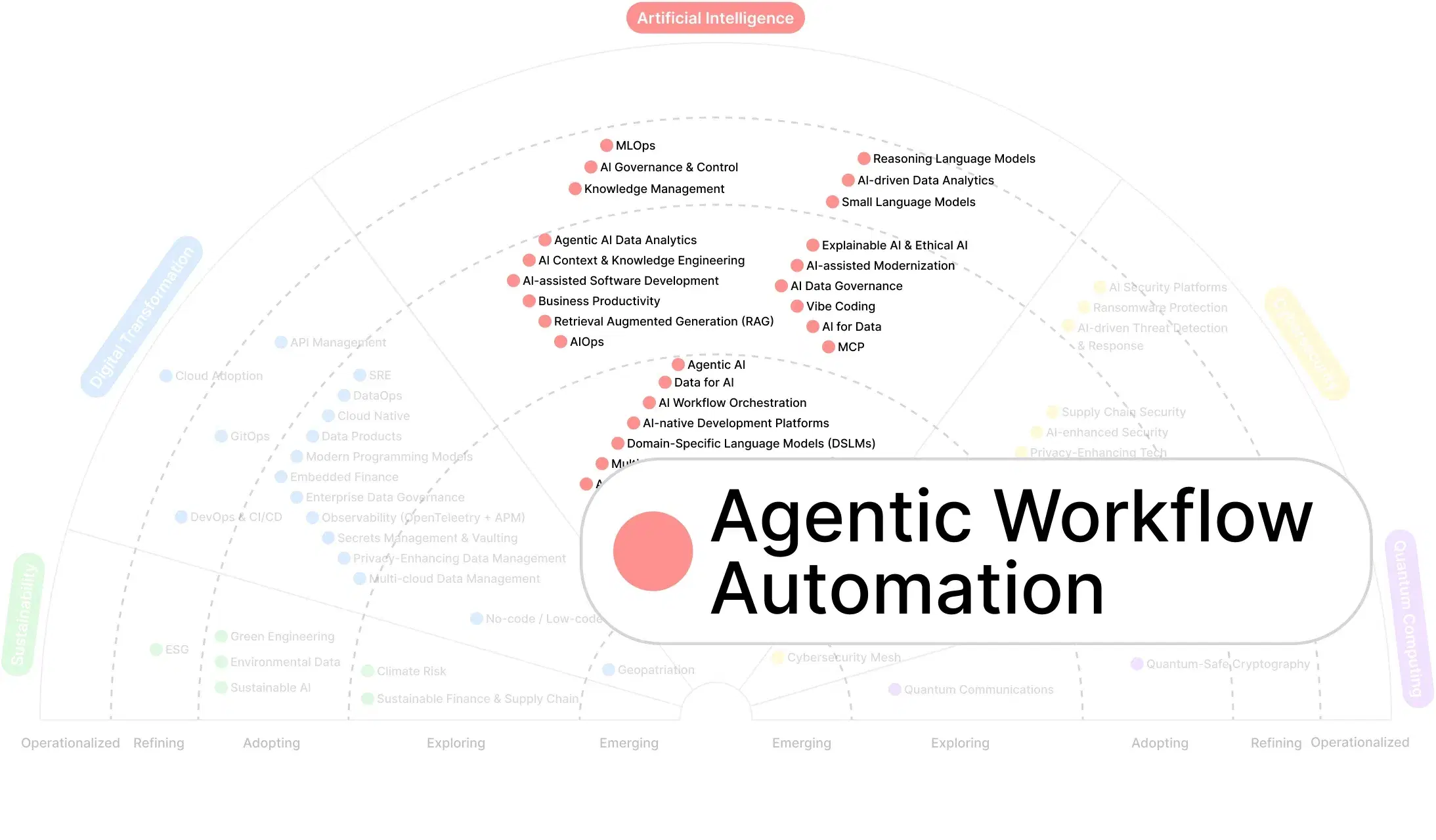
Agentic workflow automation applies agentic AI directly to business processes: email triage, case routing, document assembly, meeting scheduling, basic approvals and beyond. Instead of a human pushing work through a sequence of tools, an AI-driven orchestrator handles the routine steps and escalates exceptions.
Why It Matters in 2026
The majority of knowledge-work time in financial institutions is still absorbed by:
- Re-entering data between systems
- Gathering information across fragmented apps
- Responding to routine client or internal queries
- Coordinating meetings, signatures and follow-ups
Agentic workflow automation can:
- Free cognitive capacity for higher-value work.
- Deliver broad, inclusive productivity gains (“AI for everybody”), not just for specialized roles.
- Provide a stepping stone toward more advanced agent deployments, using familiar workflows and clear metrics.
General-purpose models are improving, but financial institutions continue to see stronger performance from models trained on domain language and regulatory context. These models handle specialized vocabulary, structured financial data and compliance constraints more accurately. They also reduce hallucination risks and produce outputs that align more closely with internal standards and product definitions.
In practice, domain-specific models allow agentic systems to draft higher-quality client communications, generate more accurate documentation and support decisions with fewer corrections. Institutions that combine agentic orchestration with models grounded in financial-language realities achieve faster adoption and lower operational friction.
Where Momentum Is Showing Up
- Software engineering is the leading edge: agents embedded at almost every step, from writing boilerplate code to suggesting test cases, delivering micro-accelerations with each interaction.
- For business operations, the most compelling early winners are simple, high-frequency tasks:
- Priority-based email triage and draft replies
- Intelligent meeting scheduling and agenda preparation
- Auto-populating CRM and case-management systems from documents and messages
- Organizations that try to start with large, complex, bespoke agent projects often face slow adoption and unmet expectations, especially when they touch only a small number of users.
Key Uncertainties
- Change management and adoption: Can organizations adapt workflows, roles and KPIs quickly enough for automation to matter?
- Process clarity: Where workflows are undocumented or heavily reliant on tacit knowledge, agents may struggle to be reliable.
- Human–agent collaboration models: How are responsibilities divided between employees and automated agents and how do we communicate that clearly?
Big Questions for Leaders
- Which repetitive, cross-system tasks touch the broadest set of employees and are therefore best suited for “AI for everyone” automation?
- Are we over-designing complex, bespoke agent automations when simpler orchestration or low-code workflows would suffice?
- How will we ensure that automation augments people, rather than creating brittle black-box processes that nobody fully understands?
Synechron Vantage Point
Our experience suggests a two-phase approach. First, start with the basics: email, scheduling, simple document workflows and internal knowledge access, giving every employee an AI layer on top of existing tools. Second, deepen into core business processes where the value and readiness justify more complex orchestrations.
In client work, we see the most durable wins where agentic automation is paired with strong product management and UX design, not treated as a technical add-on.
Trend 3 – AI-Driven Threat Detection and Response
What It Is
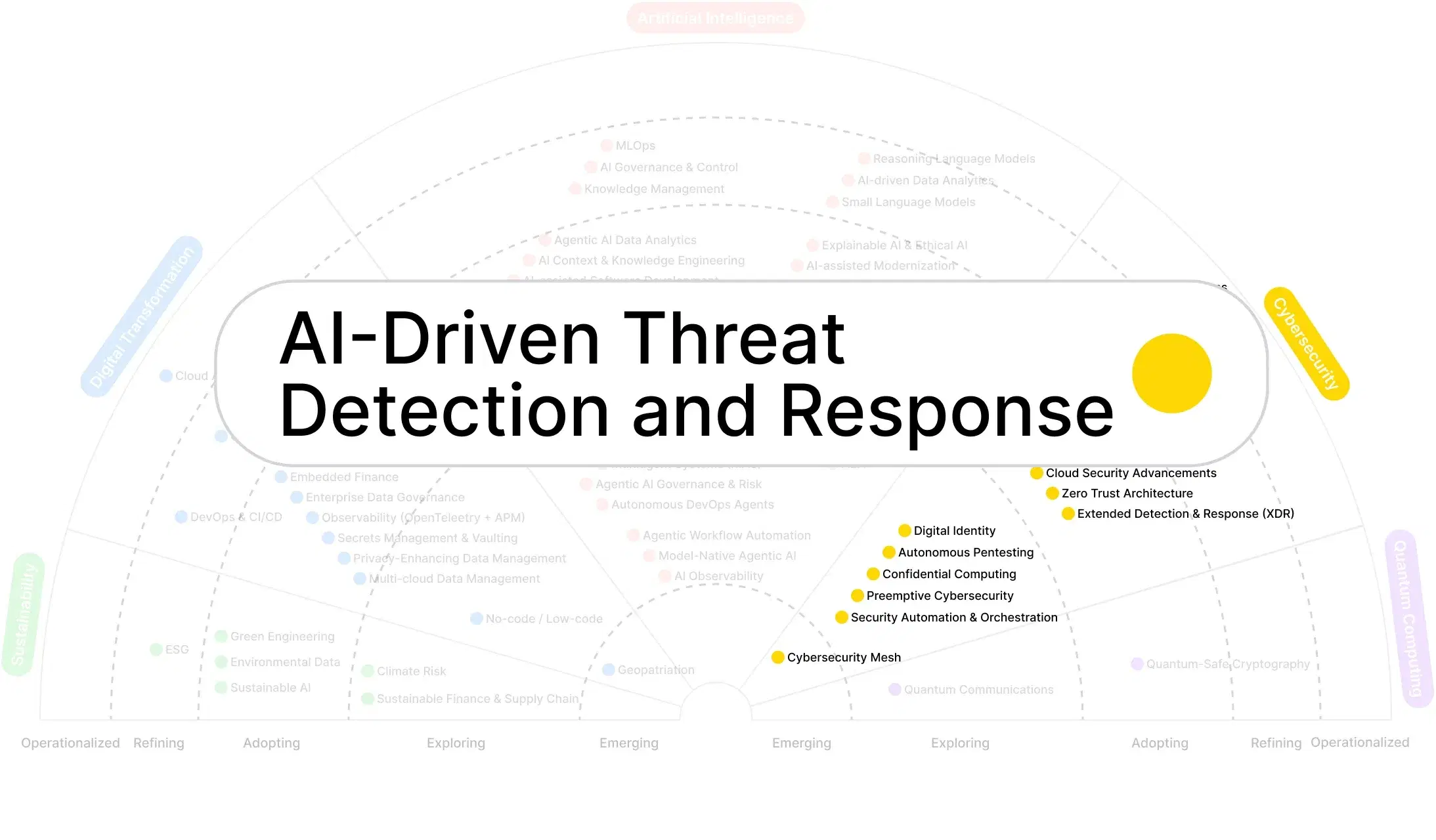
AI-driven threat detection and response refers to the use of AI to augment security operations, from anomaly detection and vendor-risk analysis to automated remediation, alongside efforts to secure AI itself (models, data flows and usage).
We distinguish between:
AI for security – using AI to strengthen defenses. Security for AI – securing the AI stack, from models and data to prompts and outputs.
Why It Matters in 2026
Security teams face:
- An explosion of security data (logs, vulnerabilities, alerts, vendor information).
- Persistent staff shortages and skills gaps, especially at the intersection of AI and cyber.
- Attackers already using AI to generate more convincing phishing campaigns and malware.
AI-driven tooling can help:
- Summarize, prioritize and correlate vast volumes of signals.
- Automate parts of vendor and supplier risk assessment, including rationalizing data across sources and flagging anomalies.
- Move toward automated response against certain threat patterns.
At the same time, unmonitored AI usage and unprotected models create new attack surfaces that many organizations have barely begun to manage.
Many organizations are expanding security practices to include end-to-end provenance for data and model outputs. Provenance controls track how data enters, moves through and leaves AI systems. They also record which models, versions and prompts contributed to a decision or generated a specific output.
This level of lineage is becoming a foundational requirement for auditability, especially as institutions automate more steps in security operations and business workflows. Clear lineage makes it easier to validate decisions, investigate anomalies and demonstrate compliance to regulators. It also supports safer agent deployments by ensuring that actions can be traced back to their origins.
Where Momentum Is Showing Up
Today, AI in security is primarily used for:
- Discovery and inventory – finding assets, models and usage patterns.
- Rationalization and summarization – triaging vulnerabilities and alerts.
- Prioritization – ranking issues and focusing human attention.
Adoption has stalled for many because CISOs are now asking a different question: Once AI identifies a threat, what can it safely do about it?
Tools like cloud security posture management platforms are beginning to add visibility into AI model usage, for example scanning cloud environments for models and usage patterns, but the governance frameworks are still emerging.
Key Uncertainties
- Regulatory expectations around AI-driven decisions in security: When is automated response acceptable and how must it be documented?
- Model robustness: How resilient are security-relevant models to adversarial attacks?
- Organizational readiness: Do security and risk teams have the AI literacy to evaluate and govern these tools?
Big Questions for Leaders
- Which parts of our security operations are ready for machine-assisted or automated response and which must stay human in the loop?
- How will we inventory and monitor AI usage across the enterprise, including shadow AI?
- What does a combined AI for security and security for AI roadmap look like for our institution?
Synechron Vantage Point
From our work and internal practice: Many organizations are AI aware in security but adoption remains limited to summarization and prioritization tools. Higher adoption will require clear, tested patterns for closing the loop with action.
Security teams are still working to unlearn traditional paradigms and learn the full AI stack, from business processes using AI to architecture and model security.
Synechron is building AI governance frameworks, updating security training to include AI topics, deploying internal accelerators to augment our own security operations and modernizing security tooling to keep pace with AI-driven workloads.
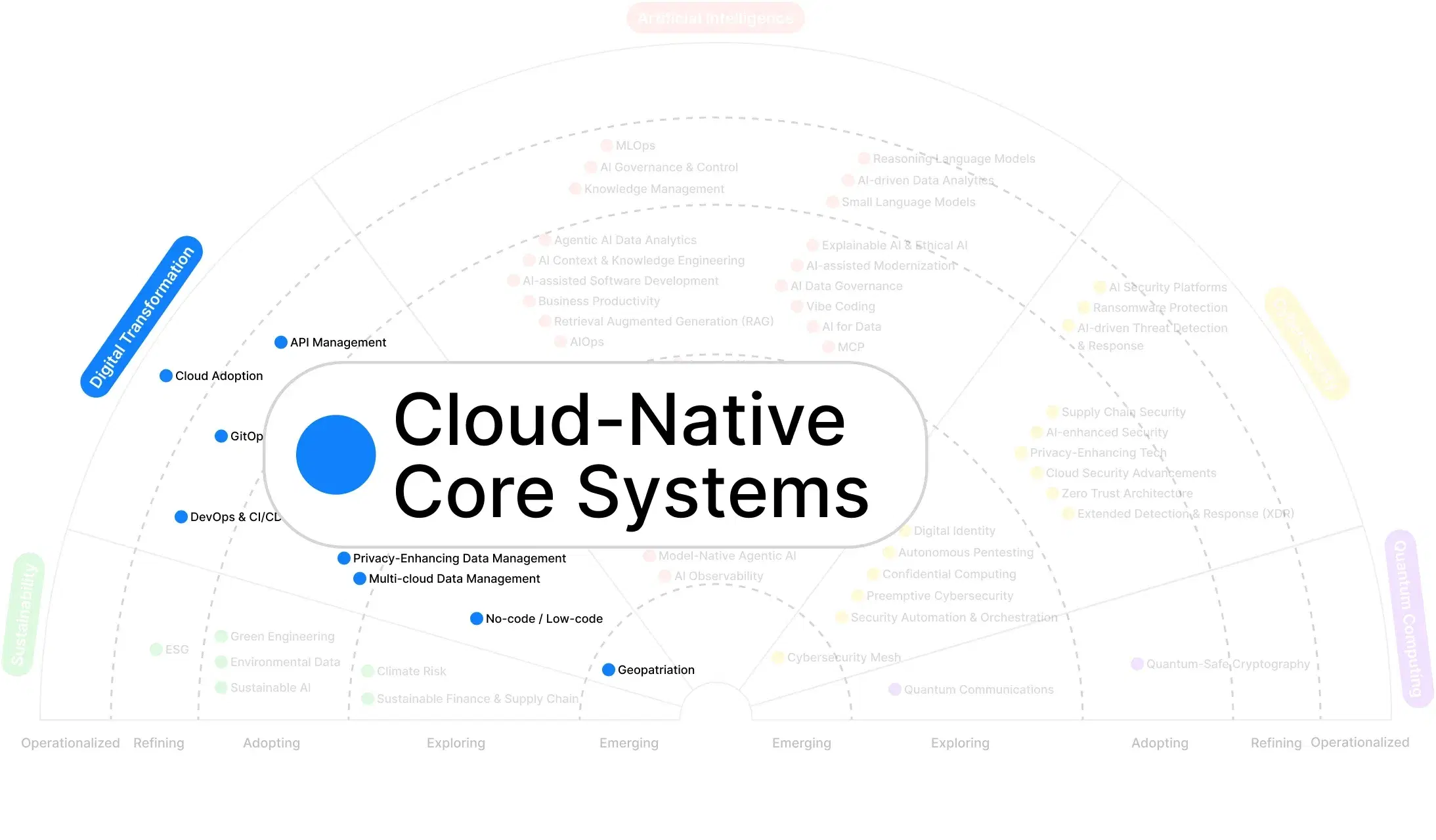
Trend 4 – Cloud-Native Core Systems
What It Is
Cloud-native core systems are built to run in cloud environments using microservices, containers, modern APIs and DevOps practices. For financial institutions, cloud native increasingly means re-platforming or refactoring fragmented internal systems into coherent, scalable, access-controlled ecosystems, often on private or sovereign cloud.
Why It Matters in 2026
Many banks still manage key processes across many internal systems:
- Separate platforms for initiating deals, uploading documents, capturing KYC, tracking approvals and generating client output
- Duplicate data entry across systems
- Long-term data discrepancies, as each new system re-captures slightly different information
Cloud-native modernization allows institutions to:
- Consolidate workflows into single ecosystems with no redundant data input.
- Enforce fine-grained access control while maintaining a single source of truth.
- Support AI and analytics use cases that depend on clean, accessible data.
Client demand remains focused on operational excellence: lower internal costs, more efficient staff and better digital experiences. Cloud is not an end in itself, but a necessary enabler.
Where Momentum Is Showing Up
Private and sovereign cloud are common models in financial services, reflecting sensitivity around data and regulatory constraints. Cloud instances must often be physically located within national borders, for example, Canadian workloads staying within Canada.
Institutions that once treated cloud as an experiment now routinely build new internal applications cloud-ready, even if some workloads remain on-premise until security teams give a green light.
Regional digital strategies differ:
In the Middle East, digital work is mobile first and tightly integrated with national digital identity systems.
In North America, more effort is aimed at internal productivity and product design, UX and front-end development.
Key Uncertainties
Regulatory evolution How will rules around data residency, critical infrastructure and AI workloads on cloud evolve?
Integration costs How far should institutions go in refactoring versus wrapping legacy systems?
Cloud economics Many organizations moved to cloud expecting cost savings that did not materialize due to operational practices (for example, instances left running).
Big Questions for Leaders
- Which high-friction, fragmented internal journeys (for example, deal initiation, client onboarding) would benefit most from a cloud-native re-platform?
- What is our target architecture for 2026, where do we want to be cloud native, hybrid or on premise and why?
- How do we ensure that cloud-native modernization is aligned with our AI, security and sustainability ambitions?
Synechron Vantage Point
Our engagements consistently surface the same patterns. The first mandate is rarely “move to cloud.” It is “solve this fragmented process and make people’s lives easier,” cloud-native architectures are the best tool available.
We differentiate by bringing brains, not bodies, probing into API design, middleware, deployment patterns, performance and load from the first discussions, often raising questions clients have not yet considered.
Synechron Labs allows us to put working prototypes into clients’ hands, turning cloud-native and AI possibilities into tangible experiences.
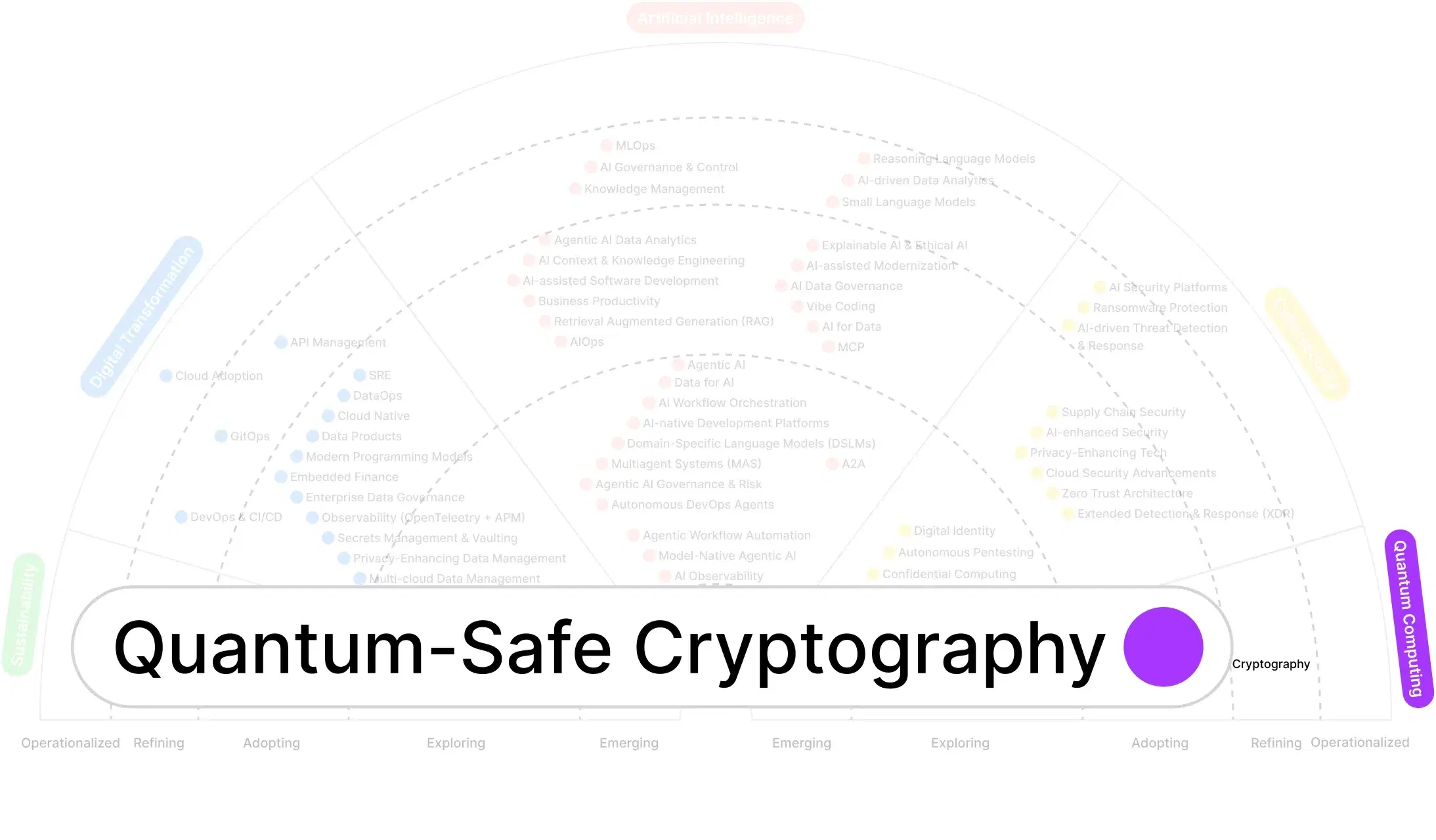
Trend 5 – Quantum-Safe Cryptography
What It Is
Quantum-safe (or post-quantum) cryptography encompasses cryptographic algorithms designed to be secure against both classical and quantum attacks. While practical, large-scale quantum computers capable of breaking today’s widely used schemes are not yet in production, financial institutions must consider the long lifetime of data and instruments they manage.
Why It Matters in 2026
Financial services handle:
- Long-lived contracts and instruments (for example, 20- or 30-year products).
- Sensitive customer and transaction data that must remain confidential for decades.
- High-value targets for nation-state and sophisticated adversaries.
Data encrypted today may be harvested and stored for decryption once quantum capabilities are available (“harvest now, decrypt later”). This makes quantum-safe planning relevant now, not in a hypothetical future.
Where Momentum Is Showing Up
- Standards bodies and regulators are publishing guidance and beginning to formalize expectations for quantum-safe transitions.
- Vendors of HSMs, key-management systems and security appliances are starting to include post-quantum options in roadmaps.
- Banks and market infrastructures are conducting initial crypto-inventory exercises, discovering where and how cryptography is used across sprawling architectures.
For many institutions, quantum-safe cryptography is less about immediate algorithm swaps and more about governance and inventory: understanding what must be protected, where and for how long.
Key Uncertainties
- Timing of quantum capability: Exactly when will cryptographically relevant quantum computers exist and how quickly will they mature?
- Performance and implementation costs of quantum-safe algorithms, especially in latency-sensitive environments.
- Interoperability: How will ecosystems, across counterparties, market infrastructures and vendors, coordinate transitions?
Big Questions for Leaders
- Do we have a complete inventory of where cryptography is used and which assets must remain secure for 10, 20 or 30 years?
- How will we prioritize systems for quantum-safe transition, balancing risk, performance and cost?
- What is our communication plan to regulators, partners and customers, around quantum-safe readiness?
Synechron Vantage Point
In our work modernizing core systems and security architectures, we find that:
- Many organizations lack a single view of their cryptographic posture, an issue independent of quantum.
- Crypto-inventory and rationalization are natural extensions to existing cloud-native and security-modernization programs, not standalone initiatives.
- The institutions that will be best prepared are those that treat quantum-safe as part of a broader future-proof cryptography strategy, aligning key management, lifecycle management and architectural simplification.
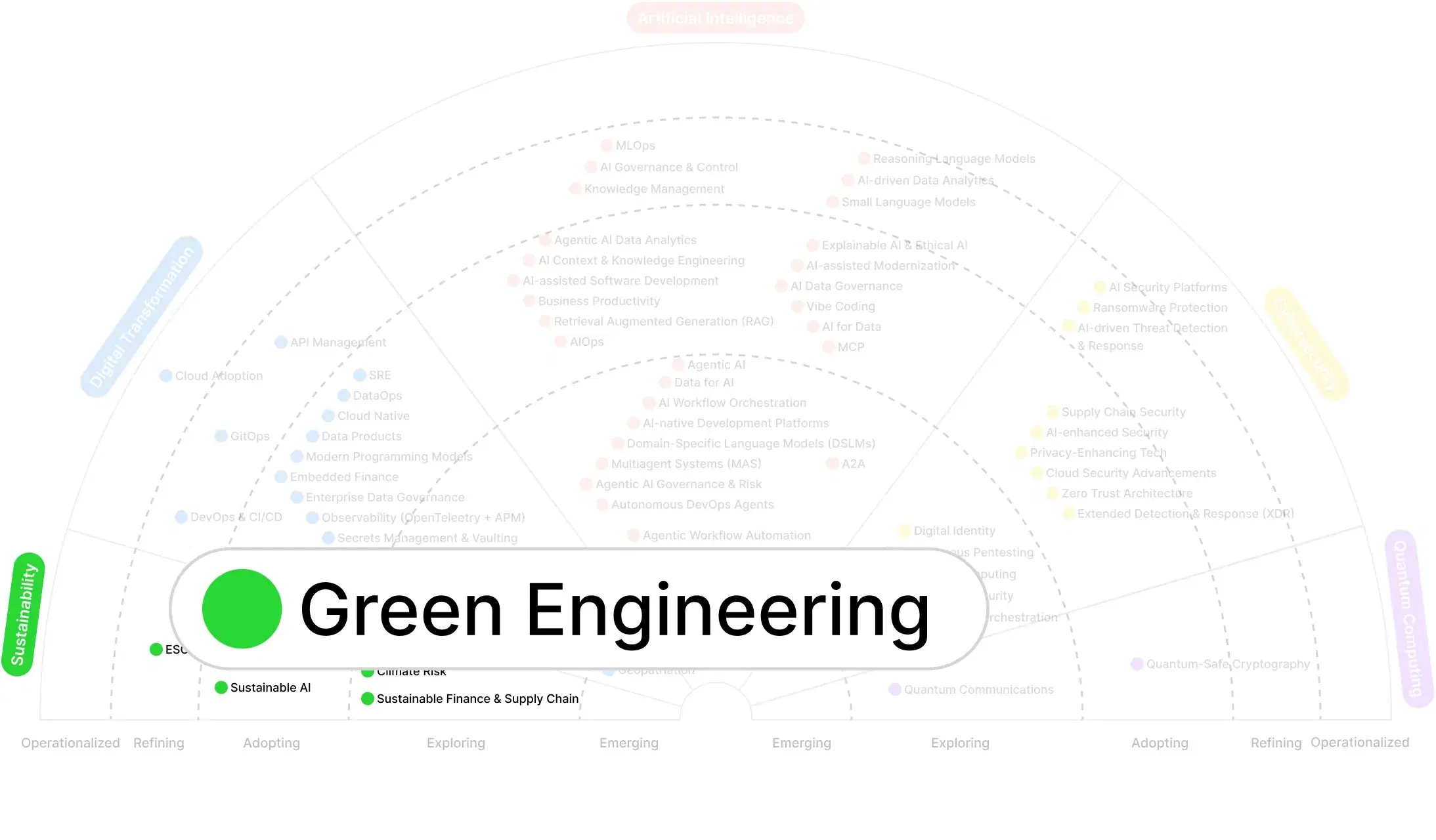
Trend 6 – Green Engineering
What It Is
Green engineering in software focuses on designing and implementing systems to minimize energy consumption and environmental impact, without sacrificing performance. This includes choices of languages, runtimes, algorithms, hardware and deployment patterns that deliver the same (or better) business outcomes with less compute and power.
Why It Matters in 2026
Paradoxically, just as interest in green engineering was rising, generative AI’s boom, driven by GPU-intensive workloads, pulled attention away:
- Green engineering was a visible topic two to three years ago, but after the launch of ChatGPT in late 2022, many organizations shifted mandates and budgets toward GenAI proofs of concept.
- As a result, the compute side of sustainability has lagged behind other ESG initiatives, such as office lighting and buildings.
Yet the underlying pressures are not going away:
- AI workloads are energy hungry and growing.
- Moore’s law is slowing; simply relying on ever-denser chips is no longer sufficient.
- Regulators and investors increasingly ask not just about ESG reporting, but about technical decisions that affect energy usage.
Where Momentum Is Showing Up
Despite overall neglect, we see meaningful activity in several areas:
-
Efficient hardware and libraries Vendors like Intel and AMD are shipping new processors and frameworks that allow more efficient use of CPU and memory, reducing energy as a byproduct of improved performance.
-
Language and runtime choices
- Using NodeJS/JavaScript frameworks (“MEAN stack”) and GraalVM instead of traditional Java VMs can support more instances per hardware box, reducing hosting costs and energy use.
- Middle Eastern banks, in particular, are early adopters of such efficient frameworks, primarily for cost and performance but with clear sustainability side effects.
- Rust and other efficient languages are emerging as alternatives to traditional enterprise stacks.
-
Greenfield advantage New (“greenfield”) projects have the greatest opportunity to choose energy-efficient tech stacks from the start, often motivated by cloud cost savings, which in turn deliver greener outcomes.
At the frontier, research into neuromorphic computing and analog AI chips suggests the possibility of orders-of-magnitude energy reductions, for example, chips capable of trillions of operations per second at a few watts instead of hundreds or thousands. Investment and availability, however, remain limited.
Why Adoption Is Still Limited
Perspective from our experts:
- Few clients are actively requesting green engineering; most RFPs fizzled and green topics rarely survive in final scope.
- Cloud customers expected significant cost reductions; many did not materialize due to operational challenges (for example, instances left running, mismanaged FinOps), leading to skepticism.
- ESG initiatives are often focused on reporting and governance, not on engineering budgets.
In short, the motivation is cost, not climate, but the technical choices that save money are often the same ones that reduce energy.
Regional Nuances
- Singapore is emerging as a hub for green-credit trading and has policy incentives that indirectly encourage green computing strategies.
- European Union mandates are pushing industries to meet energy-efficiency and emission targets, but software engineering in banking and capital markets has been slow to respond.
- Middle Eastern banks are among the most aggressive adopters of efficient stacks like GraalVM and modern JavaScript frameworks, for cost and performance reasons.
- North America, particularly the US, is focused on leading in AI capabilities, even if that means higher energy use in the near term.
Key Uncertainties
- Policy direction: Will regulators extend sustainability expectations explicitly into IT and AI workloads?
- Investment in alternative architectures (neuromorphic, analog, edge): will they attract enough funding to become mainstream?
- Vendor ecosystems and IP access: Entry costs to some European green-engineering ecosystems are still high, limiting experimentation.
Big Questions for Leaders
- When we plan AI and cloud strategies, are we explicitly evaluating energy and efficiency alongside cost and performance?
- For new projects, are we providing teams with clear guidelines and approved stacks that favor efficient languages, runtimes and hardware?
- Which of our systems are best candidates for “green refactoring,” where improvements in performance, cost and energy can be achieved together?
Synechron Vantage Point
- Developing frameworks and guidelines that prioritize efficient stacks, GraalVM, NodeJS frameworks, Rust and compiled languages like Java/C/C++ in production in place of energy-intensive scripting where appropriate.
- Working with hardware partners (for example, Intel) to exploit new CPU capabilities and SIMD instructions for more efficient database and hosting performance.
- Treating green engineering as both:
- A counterbalance to AI’s energy appetite and
- A natural extension of our long-standing work in low-latency, high-performance financial systems.
We expect green engineering to re-emerge as a visible board-level topic once AI experimentation normalizes and energy becomes a more explicit constraint.
From Experiments to Enduring Advantage
The last two years were about testing possibilities. 2026 will be about turning those possibilities into durable outcomes. The institutions that lead will no longer chase isolated trends. They will weave AI, cloud, security, sustainability, and cryptography into a single, coherent technology fabric.
Agentic AI without clean data and secure workflows will stall. Cloud-native modernization without AI-ready architecture will under-deliver. AI security without security for AI will leave core risks unmanaged. And AI at scale without green engineering will collide with energy, cost, and policy constraints.
The winners will be those who connect ambition with execution discipline, who treat architecture, governance and talent as strategic levers.
At Synechron, we believe the next era is about engineering trust, resilience and advantage at scale. The question for 2026 is not “What can AI do?” but “What can your organization achieve when every technology decision compounds into lasting value?”