AI Accelerated Engineering (AI ACE)
AI
An AI learning platform. Out of the box, we ship two eight-week courses (Agentic Engineering and AI for Non-Engineers) with track-based learning, real-time leaderboards, stretch goal detection and badge/medal gamification to drive engagement and competition.
Overview
AI ACE is a gamified learning platform for teams building with and using AI. It replaces passive courses with competitive, real-time engagement wherein students submit weekly assignments, compete on track-specific leaderboards and earn medals for progress and excellence.
The platform ships two eight-week courses out of the box: Agentic Engineering for developers wanting to get the most out of their coding agents, and AI for Non-Engineers for product managers, designers and leaders learning what's possible and what isn't. Both follow the same structure: weekly challenges, peer competition and stretch goals that push beyond baseline work.
Why We Built It
Most AI training programs fail at engagement. Students watch videos and complete exercises alone, losing momentum when there's no sense of progress or peer energy. In-person bootcamps work better, but don't scale.
AI ACE uses gamification to fix this. A real-time leaderboard shows where you rank. Points decay over the week, so submitting early matters. Stretch goals verified by a vision language model let high performers pull ahead. Medals and badges reward consistent progress.
The result feels less like training and more like healthy competition. Students move faster and build energy with peers in the same cohort.
What’s Included
1. Agentic Engineering (eight weeks, technical track):
For engineers transitioning to agentic coding assistants, and for those wanting to squeeze the most out of their tooling. We start with the important grounding, how gen AI works, and then move through context engineering, harness engineering and loop engineering — the current frontier.
By week eight, students have learned the pro features of their tools and know the current state of the art. The course is the ideal preparation for the next wave of forward deployed engineers.
2. AI for Non-Engineers (eight weeks, non-technical track):
Both courses follow an identical structure where students unlock a week's challenge, submit their work (screenshot-based for non-technical, implementation-based for technical), earn points based on submission timing and (if you attempted the stretch goal) have the Vision Language Model (VLM) verify whether you hit it.
Key Features
-
Track-based learning paths
Students pick a track on first login. The platform shows that track's challenges, leaderboard and cohort. -
Weekly submissions with screenshot-based tracking
Students submit their progress each week, either code artifacts (technical track) or screenshots of work (non-technical track). The submission system captures a timestamp, which feeds into scoring. No submission? Zero points that week. Submit late in the week? Fewer points (time decay). -
Real-time leaderboards
Rankings update the moment a submission is approved. Leaderboards are track-scoped and recalculate immediately. You see exactly where you stand against peers in real time, which creates urgency to submit early or attempt the stretch. -
AI-powered stretch goal detection
Every week, the platform offers a stretch goal, an optional challenge that goes beyond the baseline requirement. Students who attempt it submit a screenshot (or describe what they did) and the system evaluates it (with teacher approval, if required). If met, the student gets bonus points on top of their base score. This creates three tiers of performance within a single week: baseline submission (base points), early submission (time decay bonus) and stretch achievement (stretch bonus). Winners can pull significantly ahead. -
Admin review and override capability
Every submission can be reviewed by an instructor. They can:
- Approve: Accept the submission and award points.
- Reject: Ask the student to resubmit with more work.
- Override points: Manually set the point value (useful for exceptional work or edge cases).
The review system keeps instructors in the loop and ensures the leaderboard reflects genuine effort, not gaming.
The Gamification System
A leaderboard shows visual representation of progress. Win the full course track? Gold medal, potential prizes (and bragging rights).
The visual feedback drives engagement more than points alone. When students see their name climb the leaderboard, earn a new badge, or get a medal notification, they feel progress in real time. That immediate feedback is what sustains engagement across weeks.
Why This Stack?
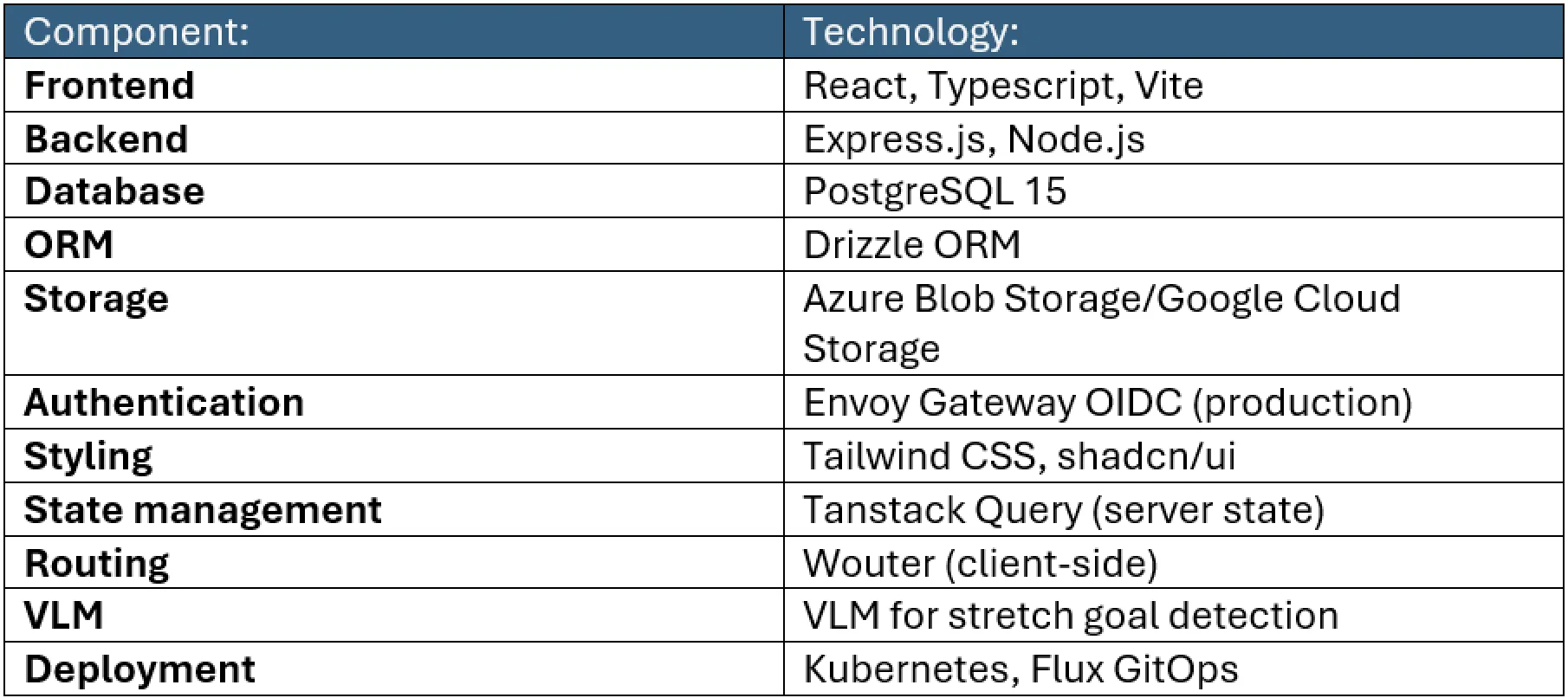
Vite and React give hot-reload development and responsive interactions. Express and Node.js keep the backend lightweight. PostgreSQL scales for relational data. Drizzle ORM lets us write type-safe queries without abstraction layer boilerplate. Azure Blob Storage handles student submissions without bloating the database.
For scoring, we send a custom rubric with each submission and get a yes/no answer back. This works across both tracks (code and screenshots) without needing two separate scoring systems. It's flexible, auditable and cheap to run.
Real-Time Leaderboards
Leaderboards recalculate the moment a submission is approved. We poll every five seconds using TanStack Query, fetching the top 20 students and their metrics. The solution is optimized for current demand, with a future path to WebSocket-based real-time communication as user volumes and concurrency increase.
What’s Next?
AI ACE launched with two courses and one Synechron cohort. Next:
- Expand cohorts: Run simultaneous courses across geographies with localized instructors.
- New course tracks: Specialized paths for specific domains (e.g. security, harness engineering).
- Async-friendly modes: Allow students to enrol any time and progress at their own pace (currently cohort-based, with a fixed start and end week).
Interested in learning more? Get in touch with Ben Newton, our Technical Product Manager ben.newton@synechron.com to discuss how we can help your teams build the knowledge and skills needed to put these ideas into practice.